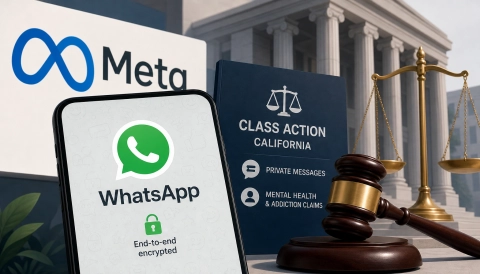
WhatsApp is back in the legal spotlight through two different Meta disputes: a California class action that questions whether private messages stayed private, and a separate social media addiction verdict that found Meta and Google liable over claims their platforms were designed to be addictive. The cases involve different legal theories, but both put fresh scrutiny on Meta’s apps portfolio.
WhatsApp’s place in Meta’s courtroom week
In one case, a Los Angeles jury found Meta and Google liable in a social media addiction trial brought over alleged harm to a young user’s mental health. The jury concluded that the companies intentionally built addictive platforms, a finding that adds to the pressure facing Meta across its family of apps, including WhatsApp, which it owns.
That verdict involved Meta, with WhatsApp only indirectly relevant through ownership. The legal issues also differ: one case targets alleged addiction harms across Meta’s wider app business, while the other targets WhatsApp message privacy.
The other dispute is narrower and centers directly on WhatsApp. It is a class action filed in federal court in California by Brian Y. Shirazi and Nida Samson. That case targets the company’s privacy promise rather than youth harm or addiction, and it raises a different question altogether: whether messages users believed were protected by end-to-end encryption could have been accessed.
The California class action over private messages
The WhatsApp lawsuit alleges that private messages could have been accessed by Meta, WhatsApp and third-party contractors despite the app’s encryption claims. It also raises questions about whether contractors could see message content that users expected to remain unreadable to anyone outside the chat.
The complaint places Meta, WhatsApp and contractors in the same frame, making the privacy issue central rather than incidental. It does not resolve whether the messages were in fact exposed, but it does challenge the company’s longstanding promise that end-to-end encryption means even WhatsApp cannot read the contents of users’ conversations.
The filing also appears to broaden the stakes beyond one-off access claims. By framing the case as a class action, the plaintiffs are seeking to represent a wider group of WhatsApp users, making the dispute about platform trust as well as the handling of private messages.
Why the two cases should not be folded together
The addiction verdict and the privacy class action point to separate problems. One is about whether social platforms were intentionally designed to keep young users hooked and damage their mental health. The other is about whether encrypted chats stayed private.
That distinction matters because WhatsApp’s role is different in each case. In the addiction trial, WhatsApp enters the picture only as part of Meta’s ownership structure. In the privacy case, WhatsApp is the service at issue.
These are two separate legal actions, and this article is covering the privacy case. The privacy case’s procedural status is still unclear, and the extent of any alleged access to messages remains an allegation. What is clear is that WhatsApp now sits at the intersection of two high-stakes legal fights over how Meta’s apps affect users, and how much users can trust what those apps promise.
About the author

Samarth Agrawal is an AI and technology professional who writes about WhatsApp, automation, and emerging AI trends. He focuses on simplifying complex tech updates into practical insights for businesses, creators, and everyday users